








Published October 30, 2026 03:01AM
On October 20, 1928, Glen and Bessie Hyde set off on the Colorado River to break a world record. In a boat Glen built himself, the newlyweds attempted a speed-record paddle from Green River, Utah, down the Colorado River through the Grand Canyon.
The record would have made Bessie the first woman to run this stretch of water—except that shortly after they launched, the two mysteriously disappeared. The couple was last seen alive on November 18, 1928. Three weeks later, rescuers found their abandoned, fully loaded boat near river mile 237. Their bodies were never recovered.
Peter Runge, a historian at Northern Arizona University, told Outside that the Hyde disappearance remains one of the Grand Canyon’s most perplexing unsolved cases.
“Everyone loves a good mystery, and this particular story has been so mysterious because there are no answers,” Runge said. Although nobody knows what happened to the couple, Runge said the archives hold some clues.
A Short-lived Love Story
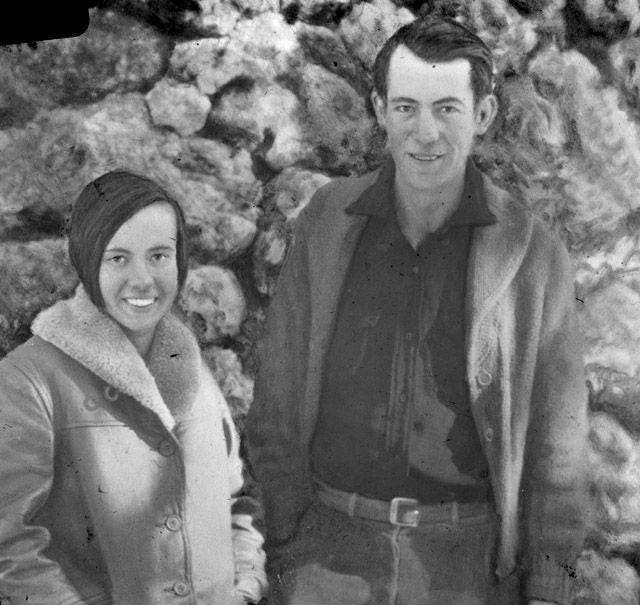
In 1996, author Brad Dimock published a book about the Hyde mystery titled Sunk Without a Sound. He describes Glen as an experienced outdoorsman who rowed the Salmon and Snake Rivers in Idaho. He met Bessie while traveling on a passenger ship from San Francisco to Los Angeles in 1925, and they married the following April—just six months before setting off on what would become a record-breaking descent.
Glen was 29 when they disappeared; Bessie was 22.
November can be a volatile time in the Grand Canyon, with chilly nights and mornings, unexpected rain, wind, and sometimes low-elevation snow.
Today, a standard river trip through the Grand Canyon runs 277 river miles, lasts 14 to 26 days, and begins at Lee’s Ferry and ends at Diamond Creek or near Pearce Ferry. It has 250 whitewater rapids, each ranked by difficulty.
“The Colorado River is a really dangerous place,” Runge said. “A lot of people go down there and make it through just fine, but that’s in part because of the skill and acumen of all the river runners, guides, sampers, and all those folks keeping everybody safe.”
At the time of their voyage, however, the Colorado River was undammed. Runge said this pre-dammed environment was extremely hazardous.
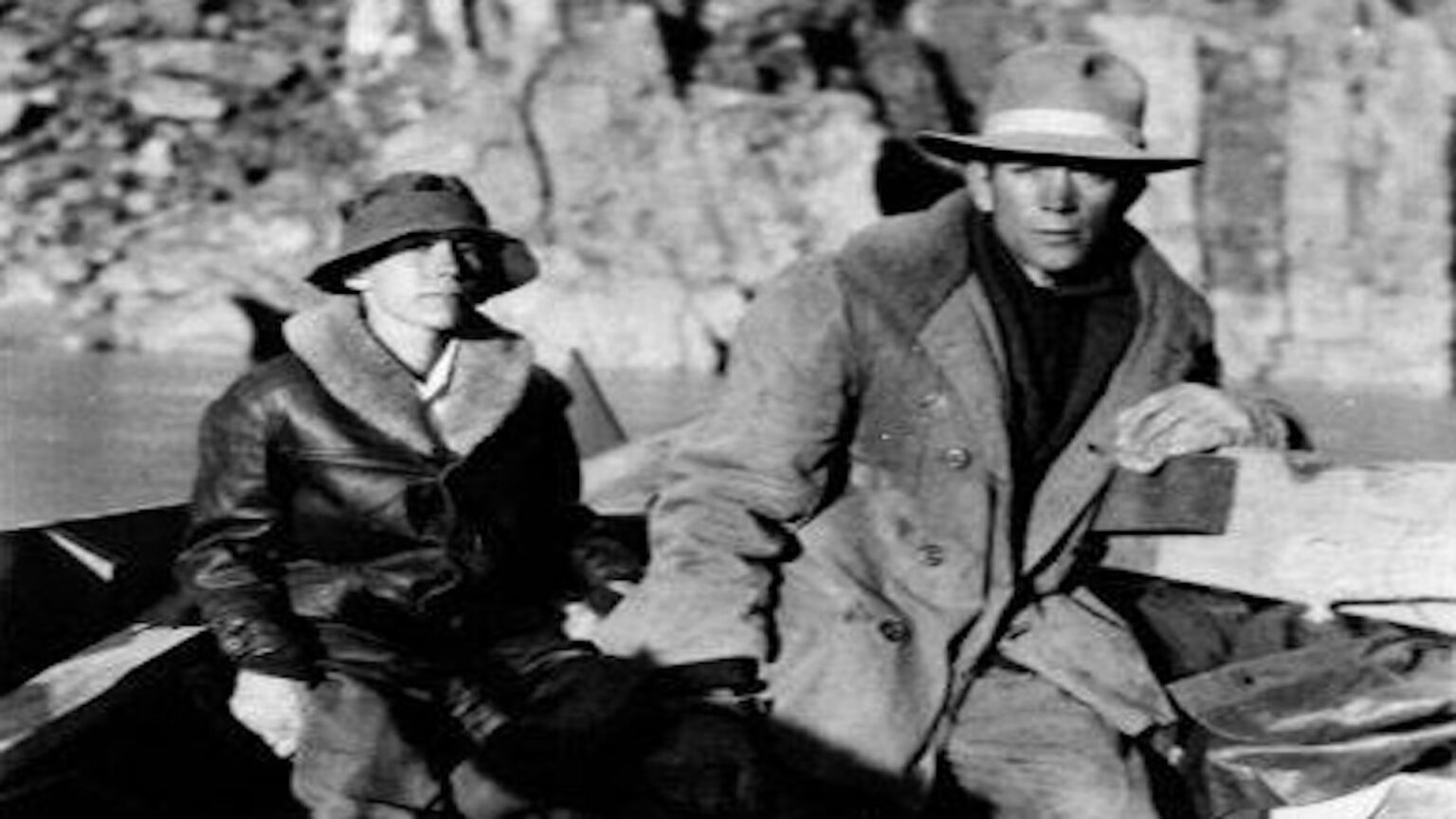
“It was a really challenging trip,” Runge said. “Looking at the visual evidence, the photographs, in the first few photos of Bessie that we have available online, you can see excitement early on. As the trip continues, there’s less and less in her eyes and facial expressions.”
In the last known photo taken of Bessie, she looks tired and worn out, according to Runge. This could have been partly due to their gear. A photograph of Glen and Bessie at the foot of Bright Angel Trail shows them wearing heavy leather, wool, and fur jackets that, if wet, would have made it difficult to move and swim freely. They also weren’t wearing life jackets, and if they had swum, their clothes would have weighed them down even more in the turbulent river.
A Boat Designed for Calmer Waters
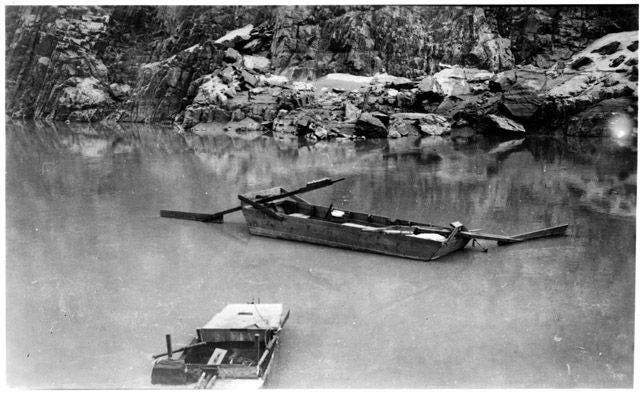
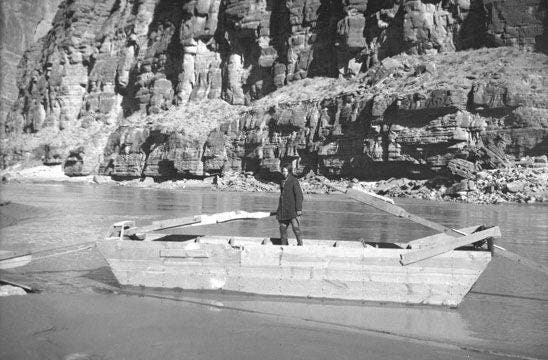
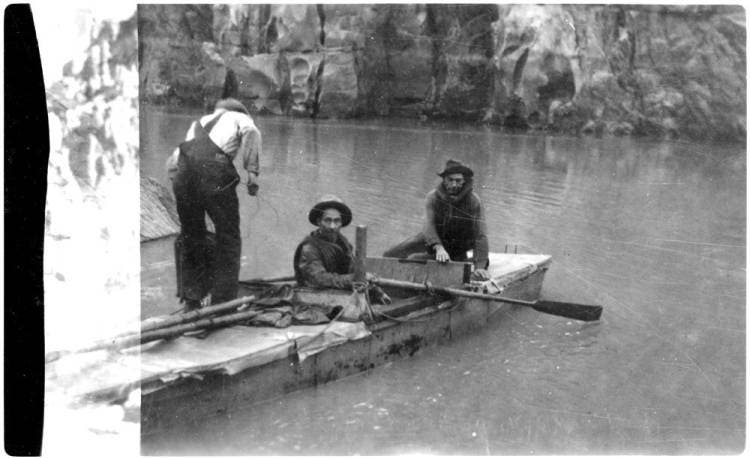
Glen designed and built the 20-foot wooden sweep boat named Rain-in-the-Face.
Unlike a rowboat or raft, a sweep boat has oars at the bow and stern. These large blades sweep the water from the bow and stern to counterbalance the boat. Because of this design, the oars don’t propel the boat forward; instead, they change the boat’s angle as it moves downstream. Sweep boats were widely used in the 1880s because they efficiently transport heavy freight on calmer waters, and they’re still used in parts of Idaho today.
“The boat that Glen built, the scow, was perfectly designed for other waters, not the Colorado River,” Runge said. “The style of boat that he constructed was common up in the Pacific Northwest, but not common down on the Colorado River. The Colorado River has rapids that were much more robust than those up in the Pacific Northwest.”
According to Runge, the cumbersome design could have caused the boat to hit a rapid or an underwater rock formation and, at the moment of impact, bucked the couple from their vessel.
“The scow is almost as if it’s a coffin without a lid,” Runge said. “As the boat was going downriver, it’s likely it hit that rock formation just beneath the surface of the water, and Glen and Bessie were thrown from the boat. Everything, all of their belongings, was found on the boat—cameras and diaries—the only things missing were Glen and Bessie.”
A Slew of Conspiratorial Theories
The river-running community remains fascinated by the Hyde mystery nearly a century later, and conspiratorial theories about what happened have pushed into modern culture
According to Dimock’s book, in 1971, a woman named Elizabeth Cutler claimed to be Bessie and alleged that she had stabbed her husband during a fight before abandoning their boat and hiking out of the Grand Canyon. Cutler later recanted, and no evidence supported her story.
Another theory centered on Georgie White, a pioneering river runner who became the first woman to own a commercial rafting business in the Grand Canyon. After her death in 1992, investigators reportedly found the Hydes’ wedding license and a birth certificate identifying Clark as Bessie DeRoss among her belongings, according to Northern Arizona University. However, the theory has a major flaw: Clark’s timeline does not align with Bessie Hyde’s disappearance.
“It’s very unlikely Georgie was Bessie,” Runge said. White began exploring the Grand Canyon in 1945 after her 15-year-old daughter was struck and killed by a driver. She has her own sad and tragic story, but it’s not this one.”
A third theory emerged after investigators discovered a skeleton in the garage of Emery Kolb, a Grand Canyon photographer and early canyon resident, following his death. Kolb captured their final photograph on November 18 and later helped search for the Hydes. The remains, believed to have been found around 1919, were accompanied by clothing fragments and a canvas canoe suspended from the rafters.
In 1980, an Arizona Daily Sun article speculated that the bones might belong to one of the Hydes. But a medical examiner identified the skeleton as that of a young man, approximately six feet tall, with a bullet lodged in his skull. An Associated Press report the following year suggested the remains could be Glen. No evidence supported the theory, and the case remained unresolved, according to the National Park Service.
The Allure of a River Mystery
What we know is that the lack of answers, the absence of recovered bodies, and river guides’ storytelling keep the legend alive.
“The river-running community loves a good mystery, and they love a good story, and they never let the truth get in the way of telling a good story,” said Runge, who’s rowed the Colorado River himself. “When you’re going down the river, part of the experience is the stories that river guides share with their passengers—scientific, geological, environmental, but also cultural and social.”
Bessie still holds the record for becoming the first woman to run Cataract Canyon and much of the Grand Canyon.