








Published July 31, 2026 11:33AM
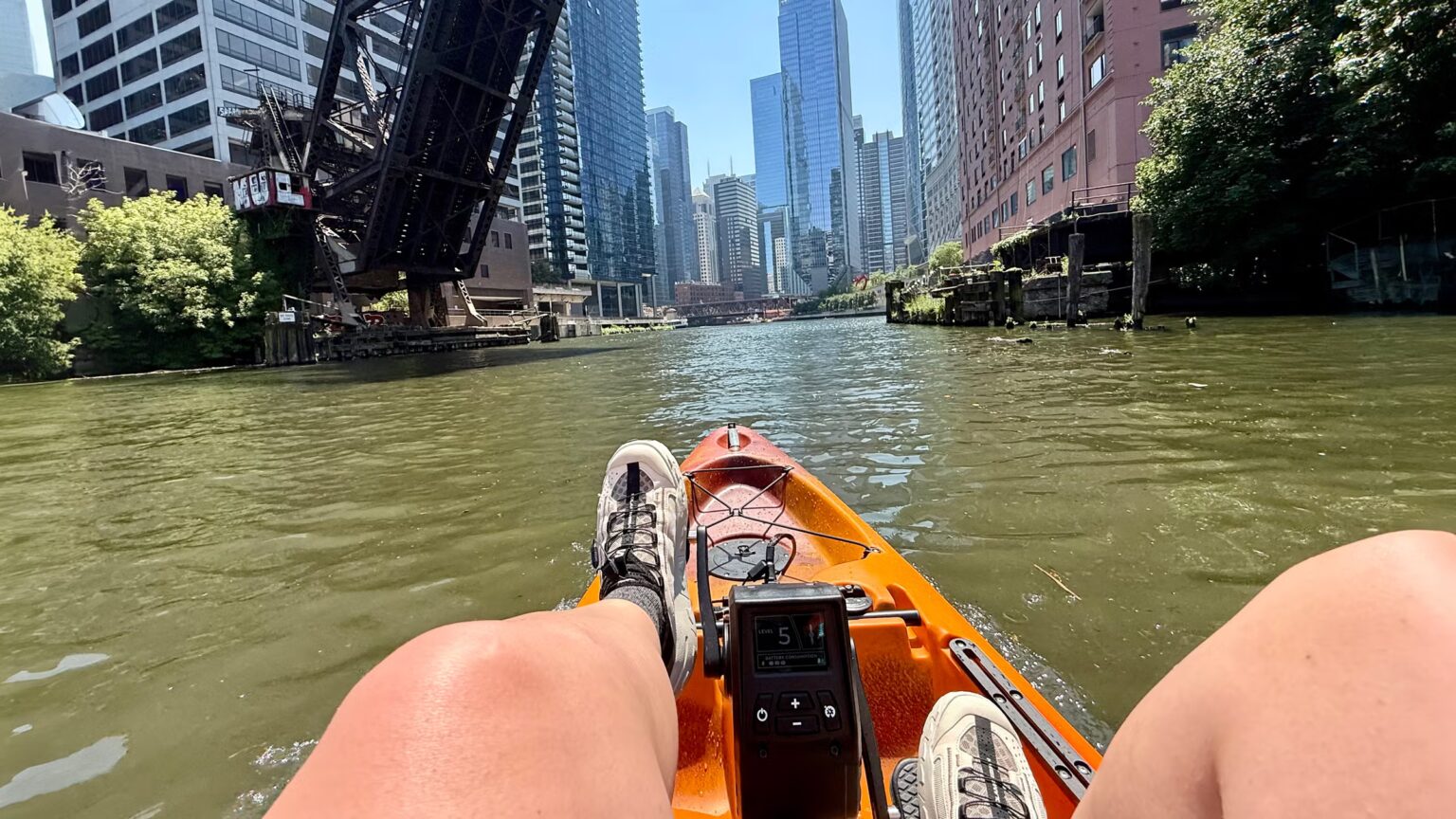
Kayaking the Chicago River into the heart of downtown might be the best-kept secret in paddling. It’s surreal to float under skyscrapers and alongside behemoth tour boats as you navigate one of the country’s most iconic urban waterways in a tiny shell.
You can rent a kayak from a local tour company. However, you’re often stuck in a large group at the guide’s pace and restricted to exploring only one particular stretch of water near the river’s exit into Lake Michigan. For an even more epic adventure, I’d suggest paddling in your own boat to explore a lesser-traveled waterway. My favorite section is the greenery-engulfed north branch of the Chicago River.
On the more wild stretch between the Lincoln Square, Avondale, and Bucktown neighborhoods, it’s common to spot snapping turtles sunbathing on logs, beavers and muskrats wading and swimming, great blue herons perched overhead, and even the endangered black-crowned night heron. You can pull off to visit local breweries and riverside parks with hiking trails, and float beneath a half dozen bridges as the Chicago “L” rolls overhead.
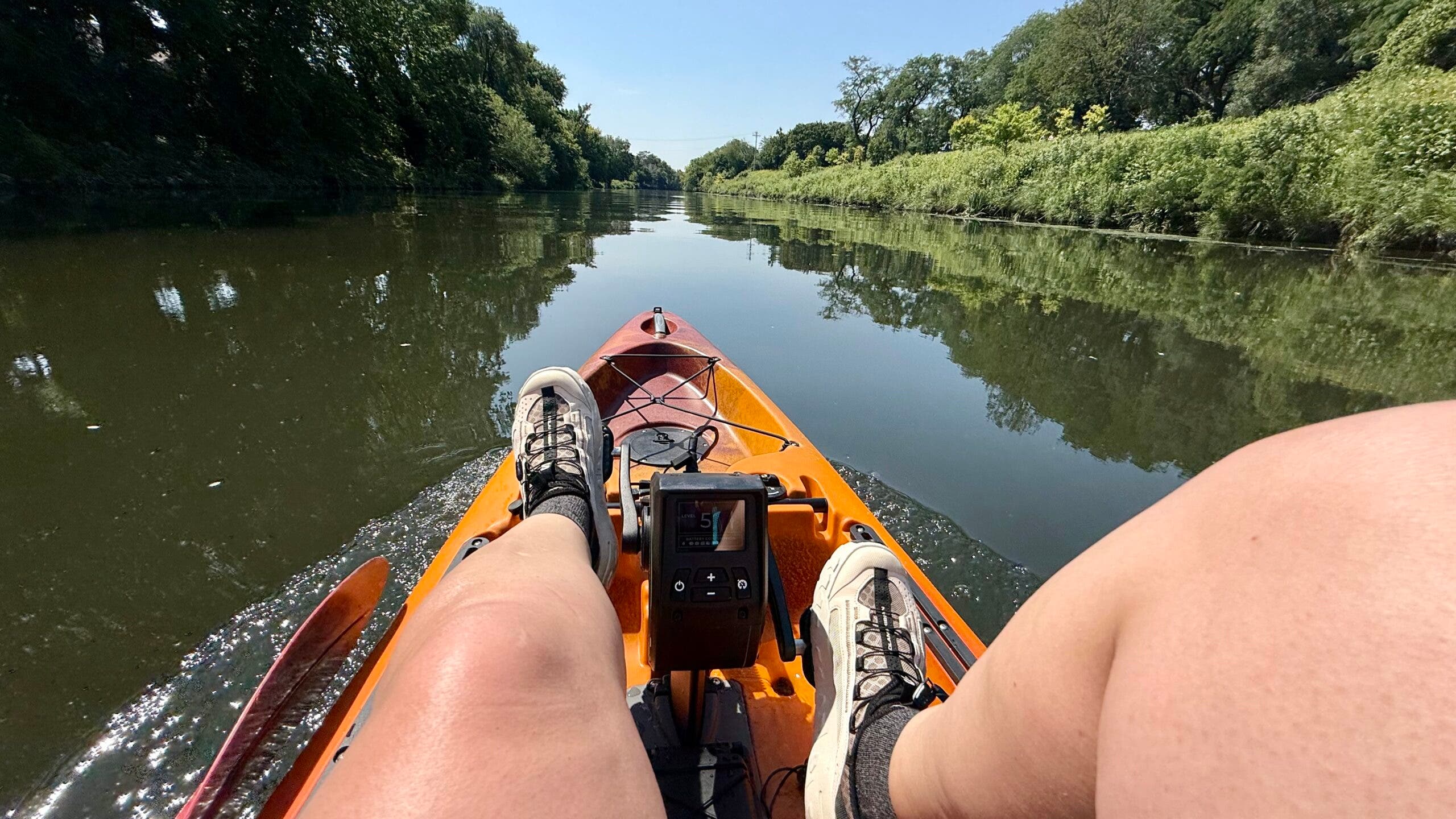
I’m lucky this route’s launching spot is close to my home on Chicago’s north side, but paddling from home all the way downtown tends to take all day.
This month, I traded my standard inflatable kayak for one that would take me much farther and faster—with much less effort. My secret weapon: the Old Town Malibu ePDL+ 120, a kayak with a pedal-drive motor that’s as controversial as it is fast. I recently paddled eight miles from River Park on Chicago’s north side to downtown in a record two hours. I’d put money on few, if any, having traveled this route faster by way of kayak.
But is the faster yet wildly expensive Malibu ePDL+ 120 better than your average kayak, or even a non-electric pedal kayak? Here’s my field report on the Old Town Malibu ePDL+ 120, along with a few other kayak types—non-electric pedal, foldable, inflatable, and hard-sided—that are worth considering if pedal-assist isn’t your speed.
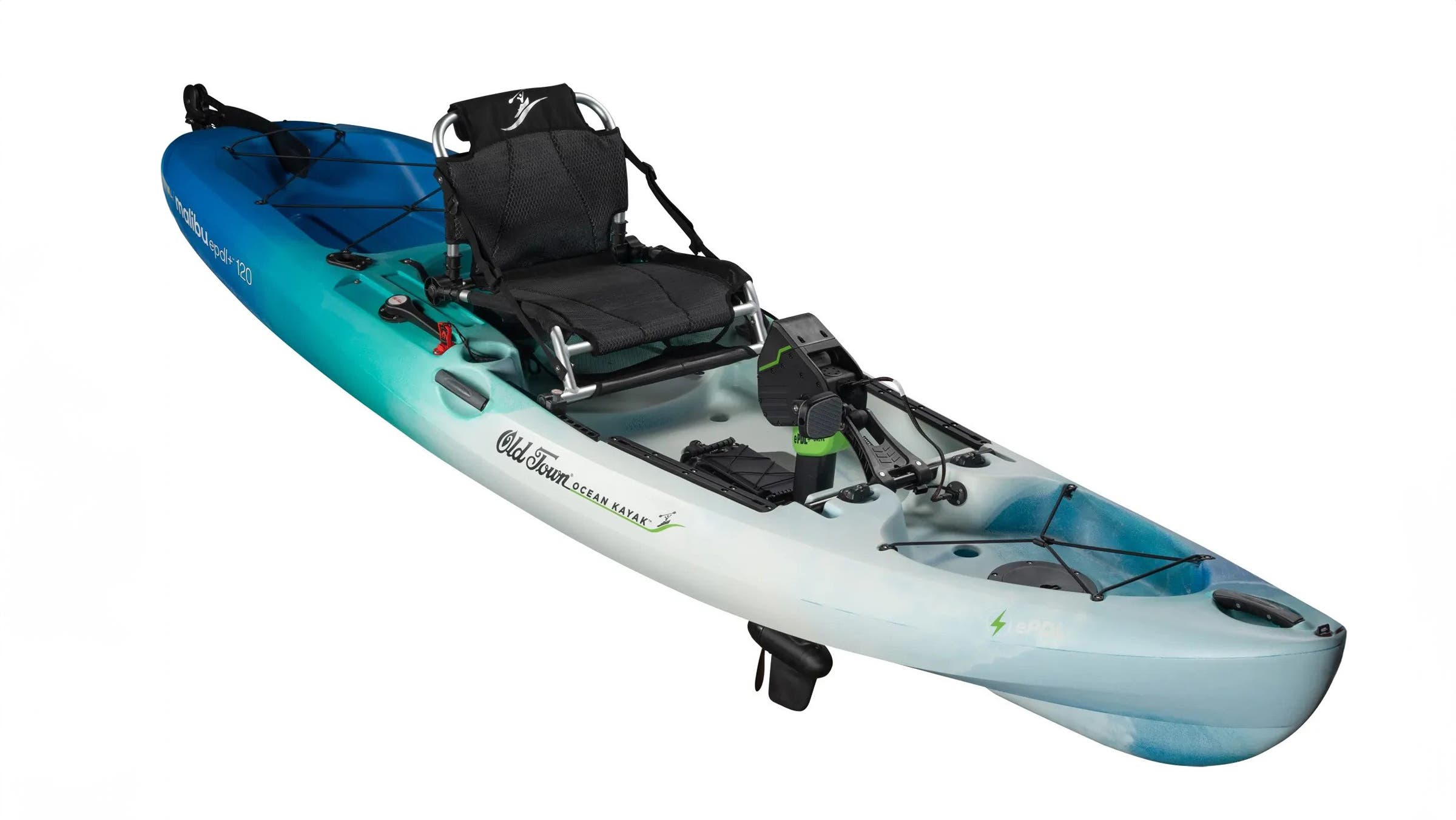
Old Town Malibu ePDL+ 120
A battery-powered pedal-assist kayak that even has cruise control
Pros and Cons
+ Lets you travel faster and farther
+ Requires less strength and stamina
– Extremely heavy (126 lbs)
– Challenging to transport
Paddling a traditional sit-in or sit-on-top kayak over a long distance not only requires upper body strength and stamina but also time to travel far. The Old Town Malibu ePDL+ 120 completely changes that.
A couple summers ago, it took upwards of six hours to paddle the roughly eight-mile (one way) stretch of the north branch of the Chicago River from River Park in Lincoln Square to city center using the Kokopelli Packraft Platte Inflatable Kayak. But I recently did the same trip with the electric-powered Malibu ePDL+ 120 in one-third the time, thanks to the kayak’s powerful 20Ah 36V lithium battery and power-assist pedal drive.
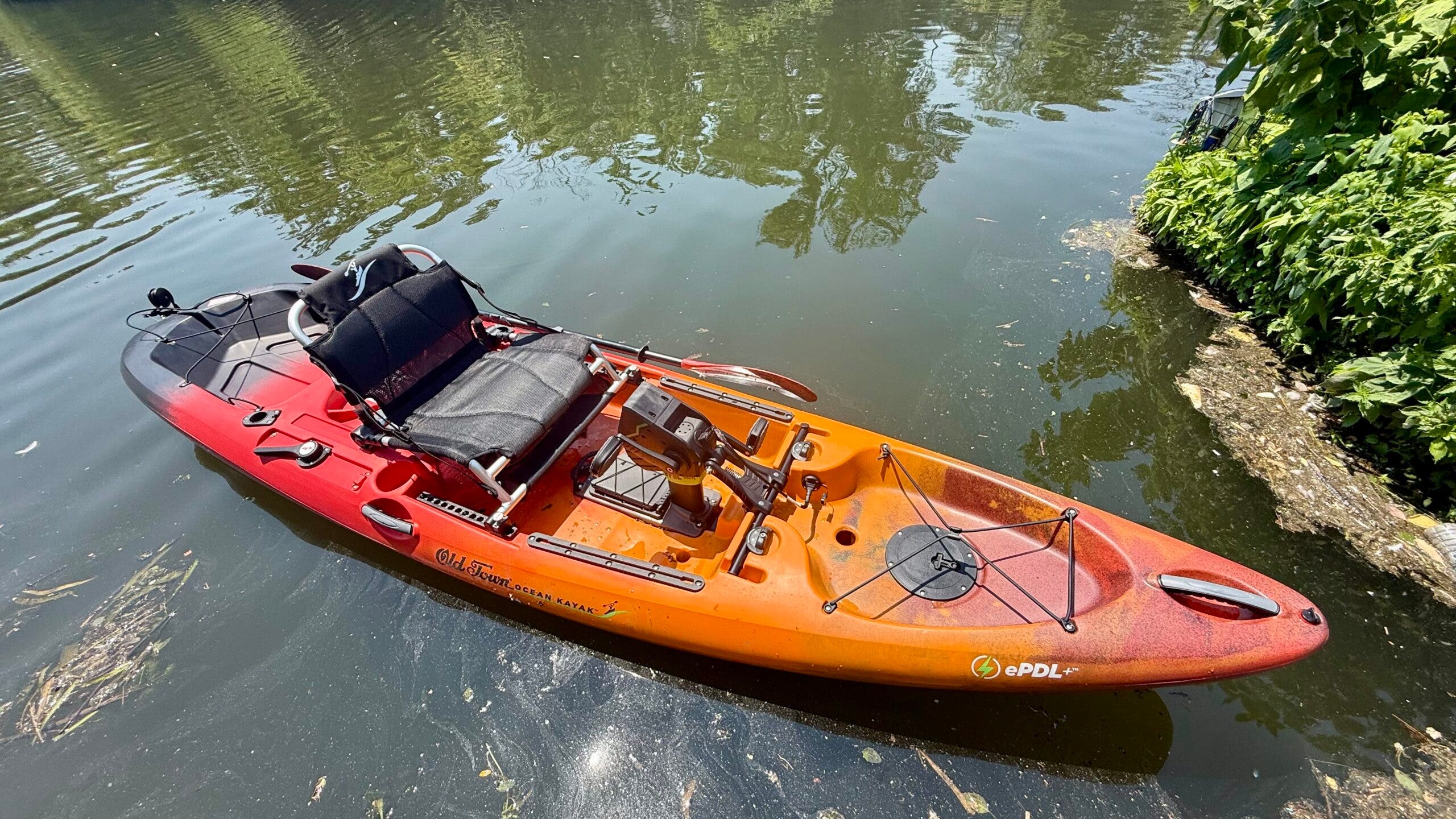
The Pros
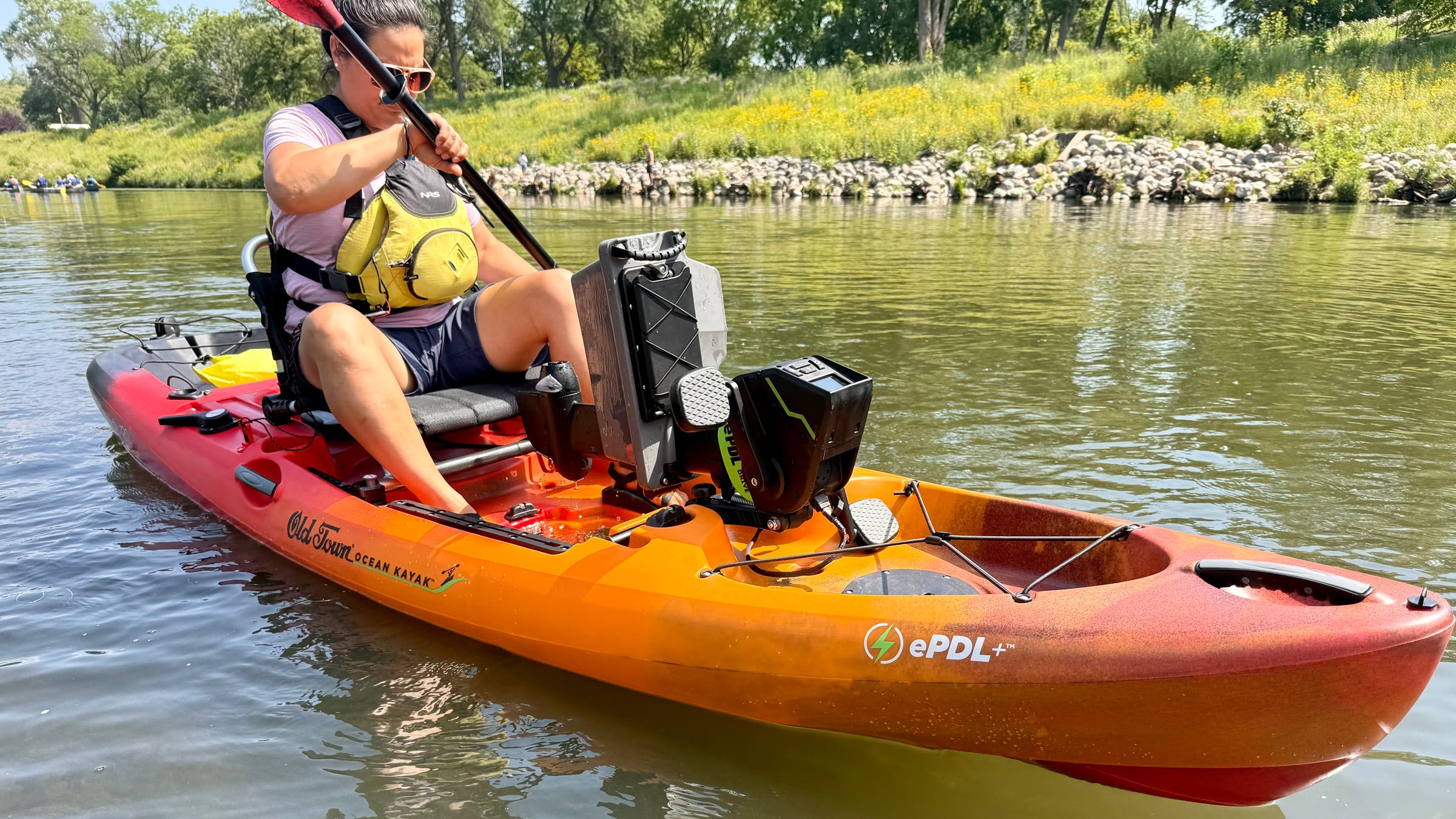
The Malibu ePDL+ 120 is essentially an e-bike for water. And I’d be lying if I said pedaling didn’t feel like cheating—a big part of a kayak’s appeal is that it’s self-powered. That said, you could make the argument that it’s more about leveling the playing field, providing an accessible way to “paddle” long distances no matter your kayaking experience, fitness level, or physical ability.
Power-assist modes on the Malibu ePDL+ 120 range from 1 (least support) to 5 (highest support). At level 4 and 5 assist, it felt like I was pedaling with barely any effort. For an even easier journey, you can set the Malibu ePDL+ in cruise control at any assist level — level 1 to 3 for a casual stroll, or 4 to 5 to full send it across the water—regardless of how much you pedal. The boat tops out at 5 miles per hour on level 5 cruise control.
Runtime varies by cruise speed. The brand claims the battery will last upwards of 46 hours on assist level 1 and at least three hours on assist level 5, without pedalling, before needing a recharge. The more you pedal the longer that range extends. I used pedal assist and cruise control on level 5 for most of the eight-mile route and only saw a 25 percent decrease in battery life over my two-hour journey. That means, if I wanted, I could have easily stayed out double or triple the amount of time. The kayak also comes with tons of gear storage capacity, holding up to 223 pounds, paddler and gear combined.
The Cons
At $5,500, the Malibu ePDL+ costs well above a standard sit-on-top or non-electric pedal kayak.
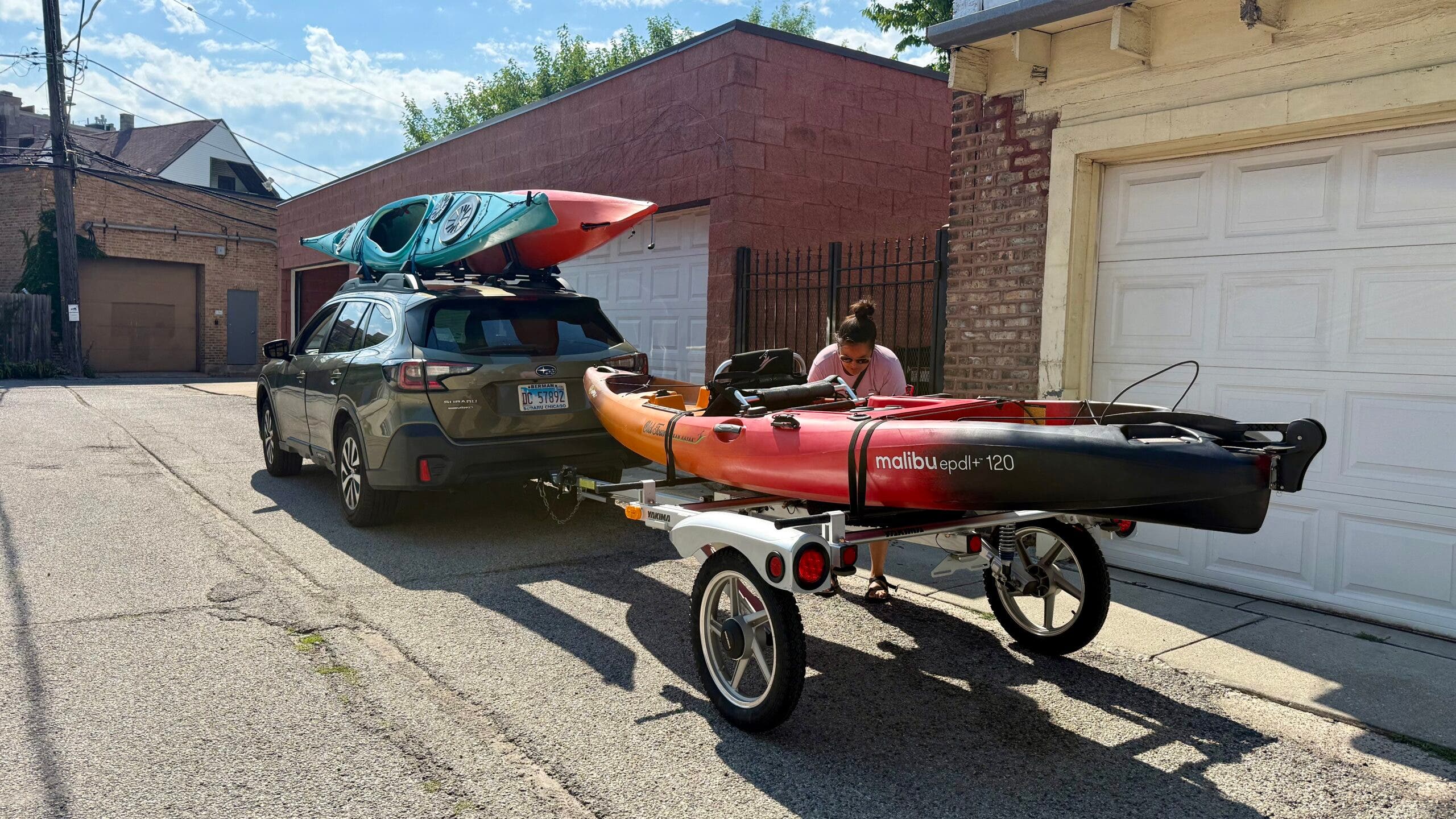
Getting Old Town’s electric kayak to the river is a herculean feat. The boat weighs 126 pounds fully assembled, with the ePDL+ pedal drive console alone weighing 31 pounds. I originally planned to pull the kayak using my Aventon Abound SR e-bike and a bike-compatible Malone Forge canoe/kayak cart. It turned out mounting an over-100-pound, 12-foot kayak is no easy task (even though the rack claims to support that much weight). The kayak was just too dang massive to pull onto the bike trailer. Every time I tried to rest the Malibu ePDL+ on top, it slid off, tipped over, and nearly threw my back out lifting it up. So I eventually gave up and phoned a friend with a tow-behind auto trailer to load and drive it to the river.
Silent paddling is another big perk of kayaking. While the motor on this kayak is certainly not loud, you can still hear the humming of the battery supporting the e-pedal drive as you propel forward. For some, that might be a downside to the experience of riding this kayak.
The Verdict: Is the Electric Kayak Worth It?
This boat was worth the effort to get it on the water. It took away all of the struggle and left all of the fun of cruising on the water. I was able to tackle a long-haul adventure with a fraction of the time, taking an eight-mile “paddling” trip in Chicago with plenty of time for work and play the rest of the day. I didn’t get as much of a workout or the satisfaction of taking the trip on my own power, but I saw a massive gray heron glide overhead, a half-dozen turtles sunbathing, and only two other humans paddling kayaks at the halfway point. Other than that, I had the entire river to myself in solitude, until I reached the heart of the city.
The Alternatives: If You’d Rather Paddle Yourself
Not everyone wants to drop a small fortune on an electric kayak or give up the relaxing experience of paddling a traditional kayak. And unless you’ve got a garage spot or spare room in the basement of your city home, you’ll likely need to factor in the cost of off-site storage.
If you’d rather skip the battery, the charging cable, and the massive lift (pun intended) to transport an e-kayak, there’s a style of boat out there for you. Whether you crave the workout of a non-electric pedal drive, the trunk-friendly transport of an inflatable or foldable kayak, or the no-fuss simplicity of a sit-on-top kayak, each style comes with its own pros and cons. Here are four kayak alternatives worth considering.
Non-Electric Pedal Kayak
Hobie Mirage Passport 10.5 R
A traditional pedal kayak that cruises on leg power alone.
Pros and Cons
+ Hands-free propulsion without the extra battery weight
+ Significantly more affordable than an electric kayak
– Heavier and bulkier than a foldable or inflatable kayak
– Forward-only pedal (no reverse)
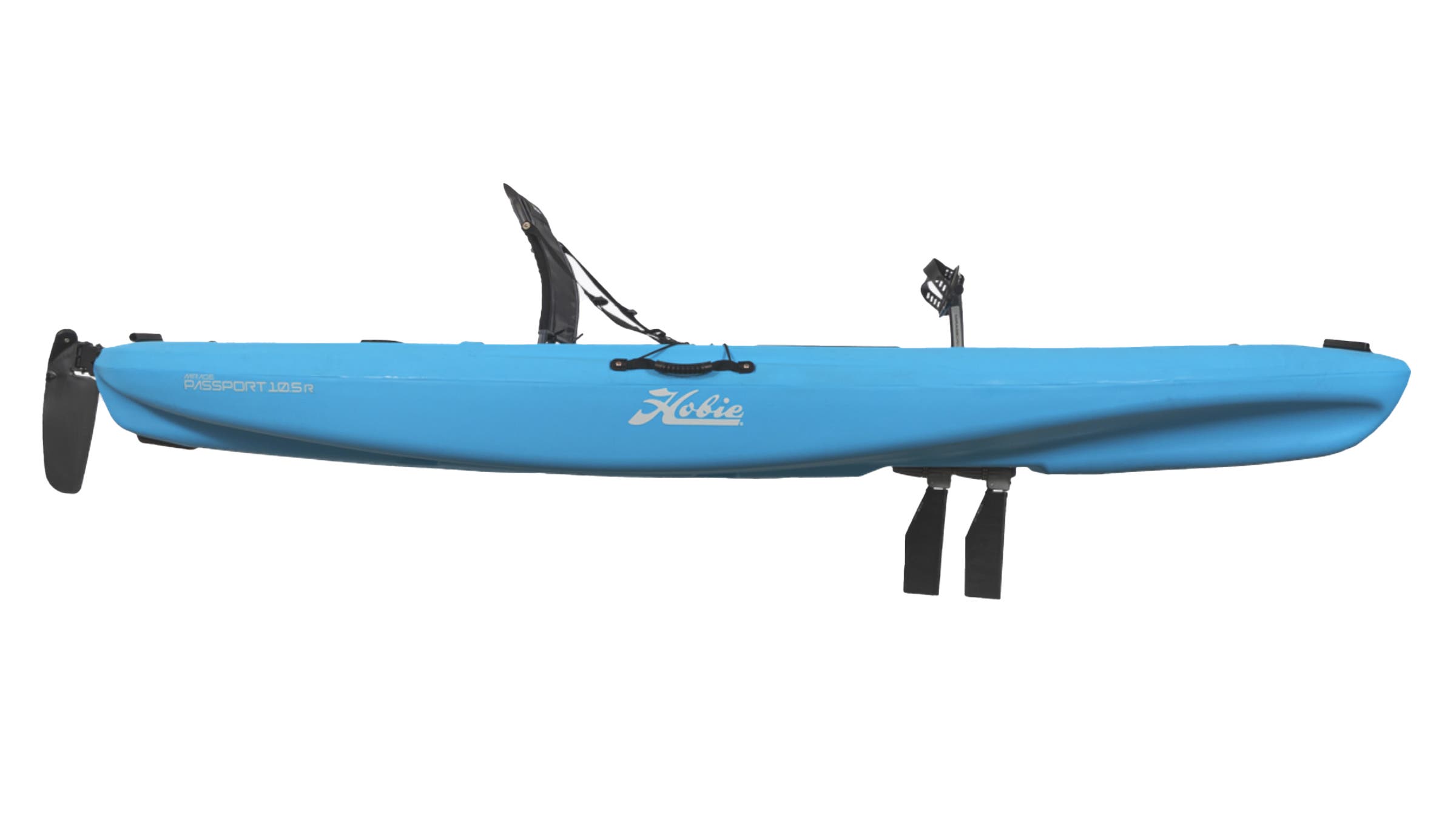
If the Malibu ePDL+ 120 is the splurge of pedal kayaks, the Hobie Mirage Passport 10.5 R is the money-saver. This “budget-friendly” pedal kayak ditches the battery altogether at a fraction of the cost. The tradeoff: Your legs are the engine.
Hobie’s MirageDrive fin system keeps you cruising through the water with ease. Instead of a motor doing the work, or your arms plunging a paddle, your legs push a pair of fins back and forth underwater.
At 75 pounds, it’s 51 pounds lighter than the Malibu ePDL+ 120. That means it’s easier to transport, no trailer required. One person can hand-carry it or load it onto a roof rack. You will certainly exert more effort on the Mirage Passport 10.5 R, and it’s forward-only, so backing out of tight spots means grabbing the paddle instead of reversing the pedals. What you gain is the satisfaction of miles earned, and a lighter, easier-to-transport pedal kayak at a third of the price.
Foldable Kayak
Oru Lake Sport
An “origami kayak” that’s simple to transport and easy on the budget
Pros and Cons
+ Fits easily in the trunk of your car
+ Lightweight and easy to carry
– Less durable than hard-sided kayaks
– Difficult to use in strong wind
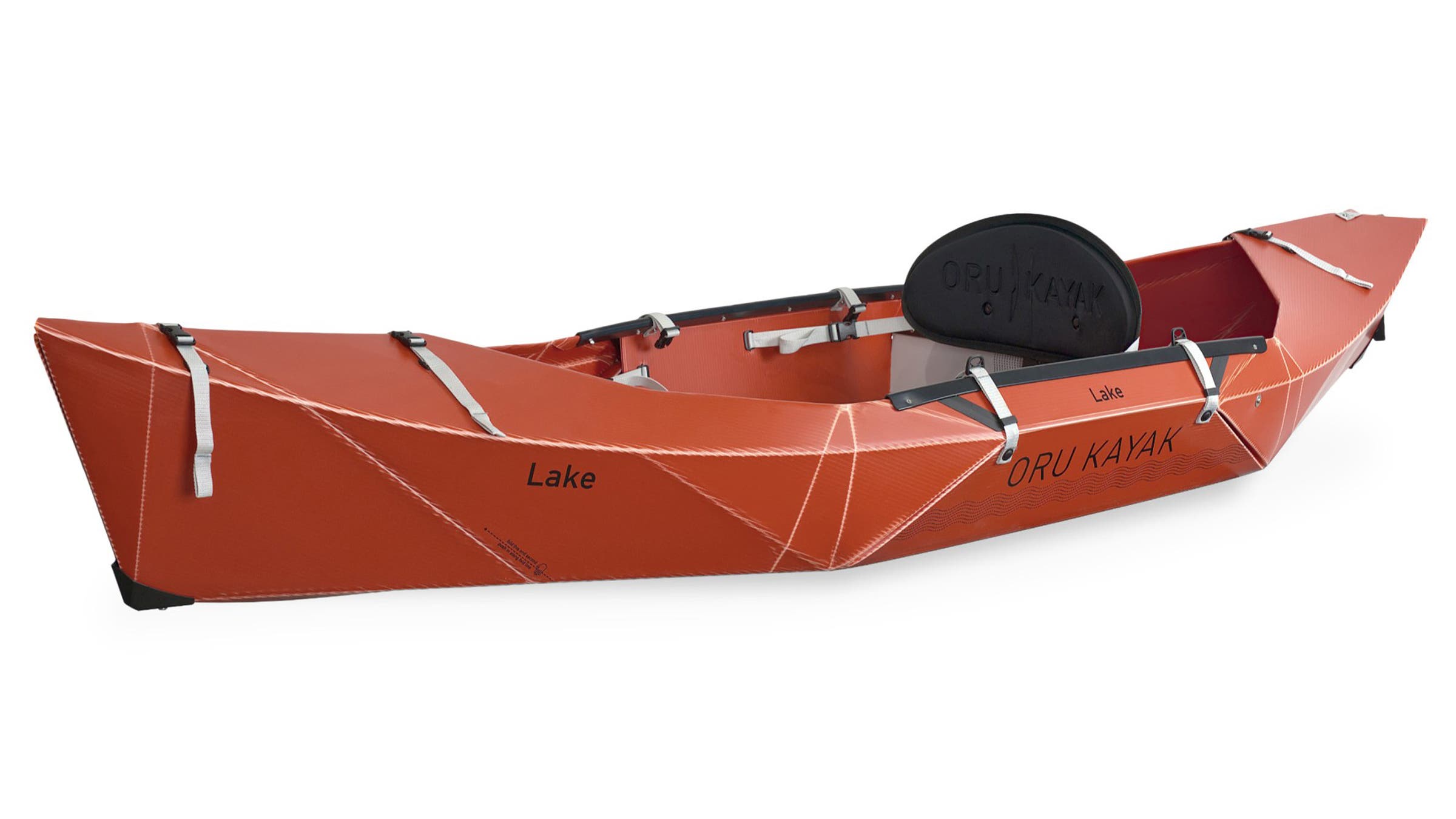
If portability and saving space are your main goals, make one of Oru Kayak’s foldable, origami-style kayaks your pick. This foldable kayak can live in your closet, not your garage; It packs down to the size of a piece of checked luggage. I’ve even seen people take their Oru kayaks on the Chicago “L” train to get to Lake Michigan. Now that’s an urban adventure.
Oru makes several models, but the Lake Sport is our pick for its balance of durability, price-point, and performance. It’s constructed from a durable, double-layer polypropylene, and easy to fold and snap together without tools. Because of its light weight, I’d recommend this kayak for calmer waters like inland lakes, slower rivers, and casual day trips—not whitewater or gusty conditions.
The perk, though, is that its mere 18 pounds is dramatically easier to transport than hard-sided kayak counterparts. This is the perfect kayak choice for casual kayakers, urban adventurers, and folks living in homes lacking extra storage space.
Inflatable Kayak
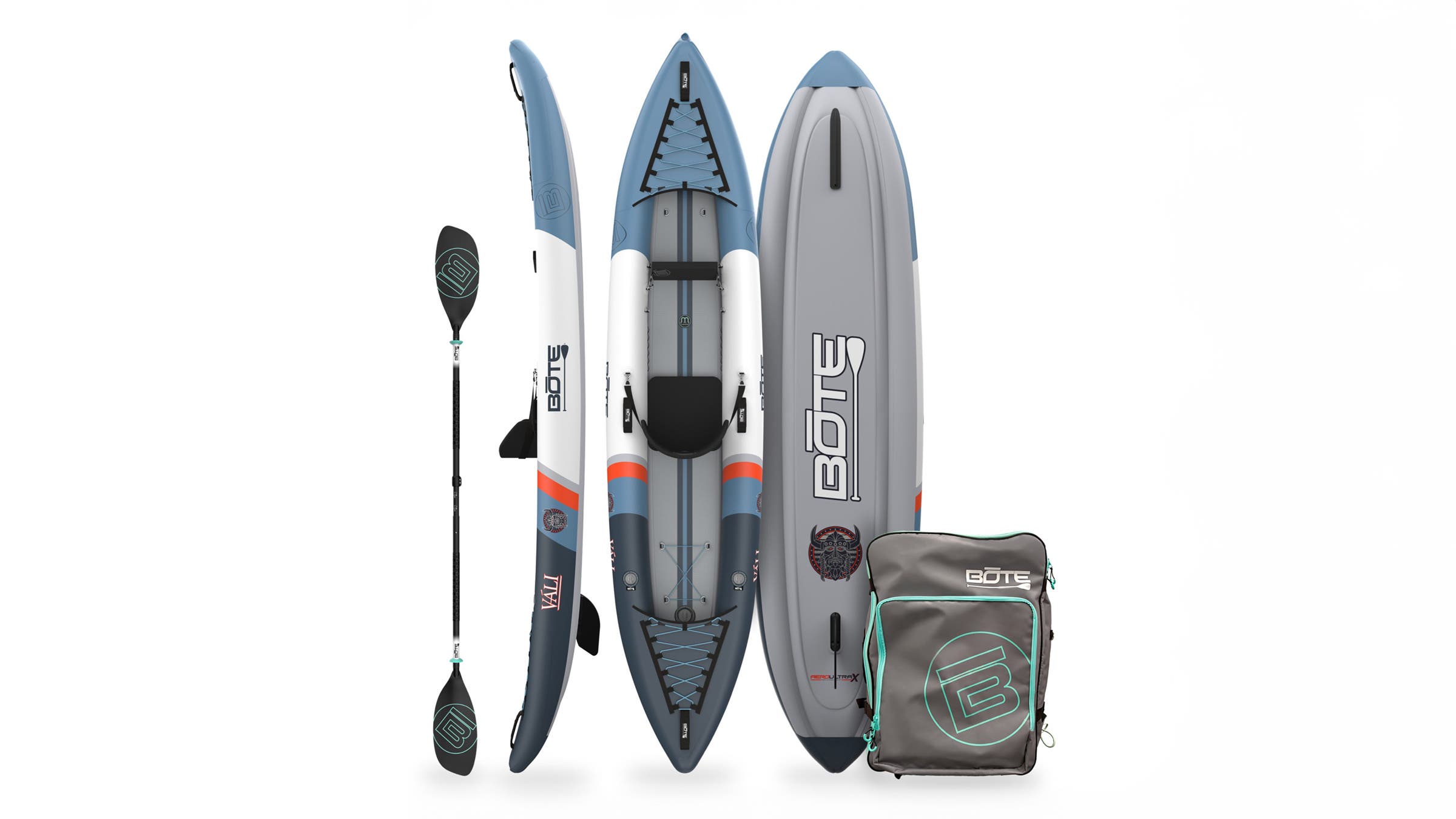
BOTE Vali Aero
A lightweight, inflatable kayak that packs small, inflates quickly, and weighs next to nothing
Pros and Cons
+ Ultralight
+ Collapsable
+ Includes backpack carrying case
– More susceptible to punctures than hard shells
– Requires electric or manual pump to inflate
Inflatable kayaks have earned their popularity for good reason, and the BOTE Vali Aero is a strong example: It packs down small, weighs less than 20 pounds (11′ and 13′ lengths), and is super easy to transport in its backpack-style storage bag. Despite concerns about inflatable kayak durability, the Vali Aero is built with military-grade PVC that’s no match for gravel, rocks, and river bottoms. It also has an impressive rigidity that feels closer to hard plastic than your typical inflatable material when pumped up.
It’s one of the lightest, most portable inflatable kayaks on the market. It’s not quite as grab-and-go as the Oru Lake Sport but it’s just as light and arguably more compact. For mountain folks, the backpack carrying case means you can hike it up to an alpine lake to paddle in solitude. For urban dwellers, it takes up minimal storage space and can be carried on your back on a walk to the water. One caveat: An electric pump will make your life easier.
Punctures are still a risk with any inflatable. But for calm lakes, easy floats, and anyone willing to trade a little ruggedness for a kayak they can actually carry there, the Vali Aero checks the boxes for city and mountain paddlers alike. Fishing while kayaking more your style? You might want to snag the Bote Argo Aero for your adventures for its fishing-focused features like rod holders and an elevated seat for casting.
Hard-Sided Kayak
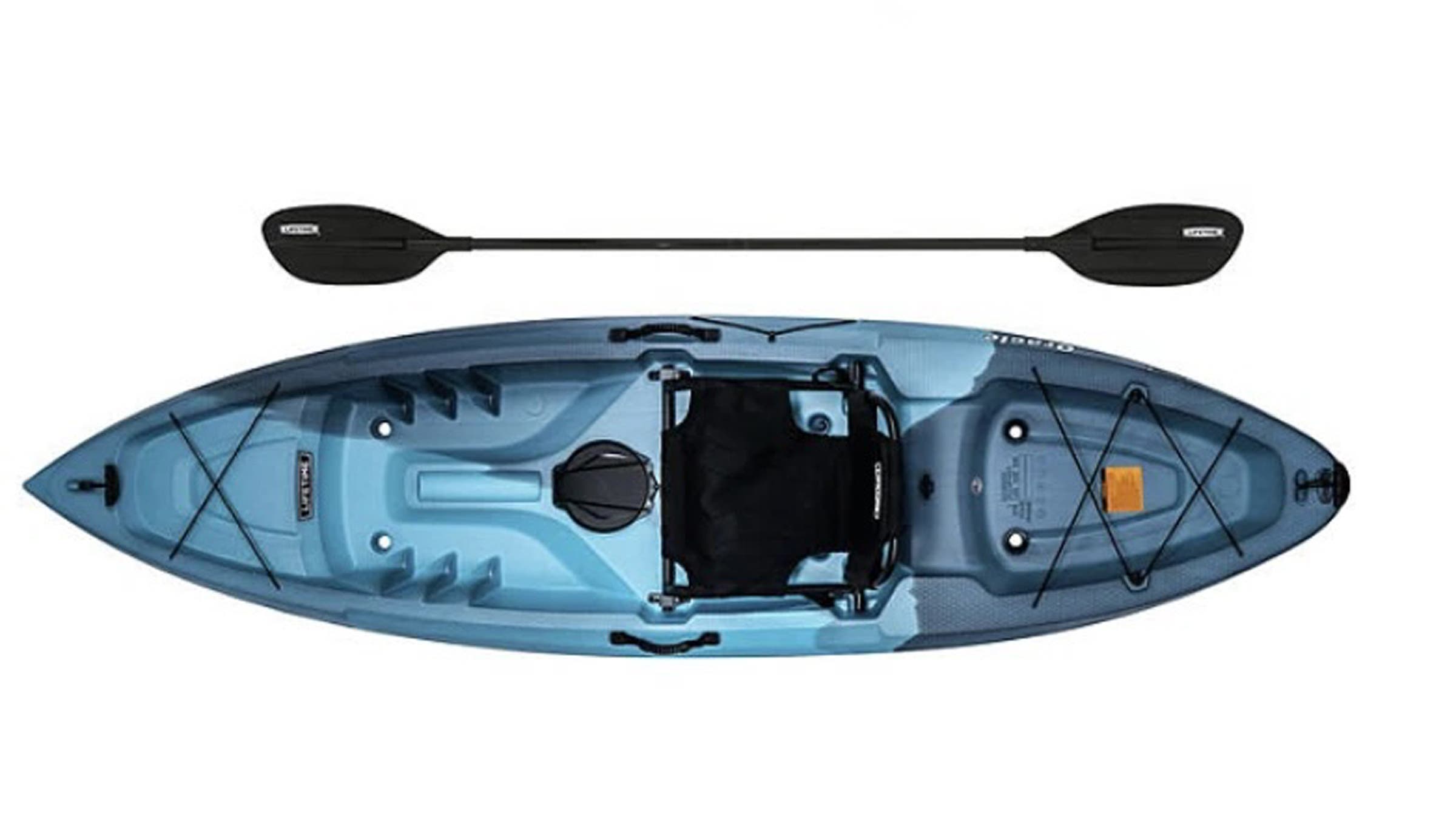
Lifetime Oracle 103
A casual sit-on-top kayak for lakes and calm waters
Pros and Cons
+ Stable paddling experience
+ Virtually no set up required
+ Requires little maintenance over time
– Heavy
– Not super portable
Consider yourself a kayak purist? We get it. There’s nothing quite like the ease of maintenance and freeing nature of paddling a tried-and-true, hard-sided kayak. While it’s a heavier lift (literally), nothing beats the ease of throwing a classic plastic kayak on a roof rack atop your car.
The Lifetime Oracle 103 checks several boxes when it comes to a practical pick: no charging, no folding, no inflating. And, sure, there are cheaper sit-on-top kayaks like the Lifetime Lotus or Pelican Sentinel 100X. But the compromise is less on-water stability, choppier handling, and a lack of overall comfort—especially on longer paddles.
The Oracle 103 is built with UV-protected, high-density polyethylene, which means this boat is designed for stability over speed and can withstand everyday dings and scratches without fear of imminent damage. It also weighs under 50 pounds—relatively lightweight for a standard hard-sided kayak. Its flat bottom and deep hull design helps this kayak track in a straight line. And it’s nearly impossible to tip. For these reasons, it’s a great beginner-friendly boat and a smart choice for families with kids or pets who want to come along for the ride.