





Published September 15, 2026 04:42PM
On September 10, a mountaineer from San Jose, California, summited Mount Shasta around 7:30 P.M. According to a rescue report from the Shasta-Trinity National Forest Service (STFS), that was the least eventful part of his climb.
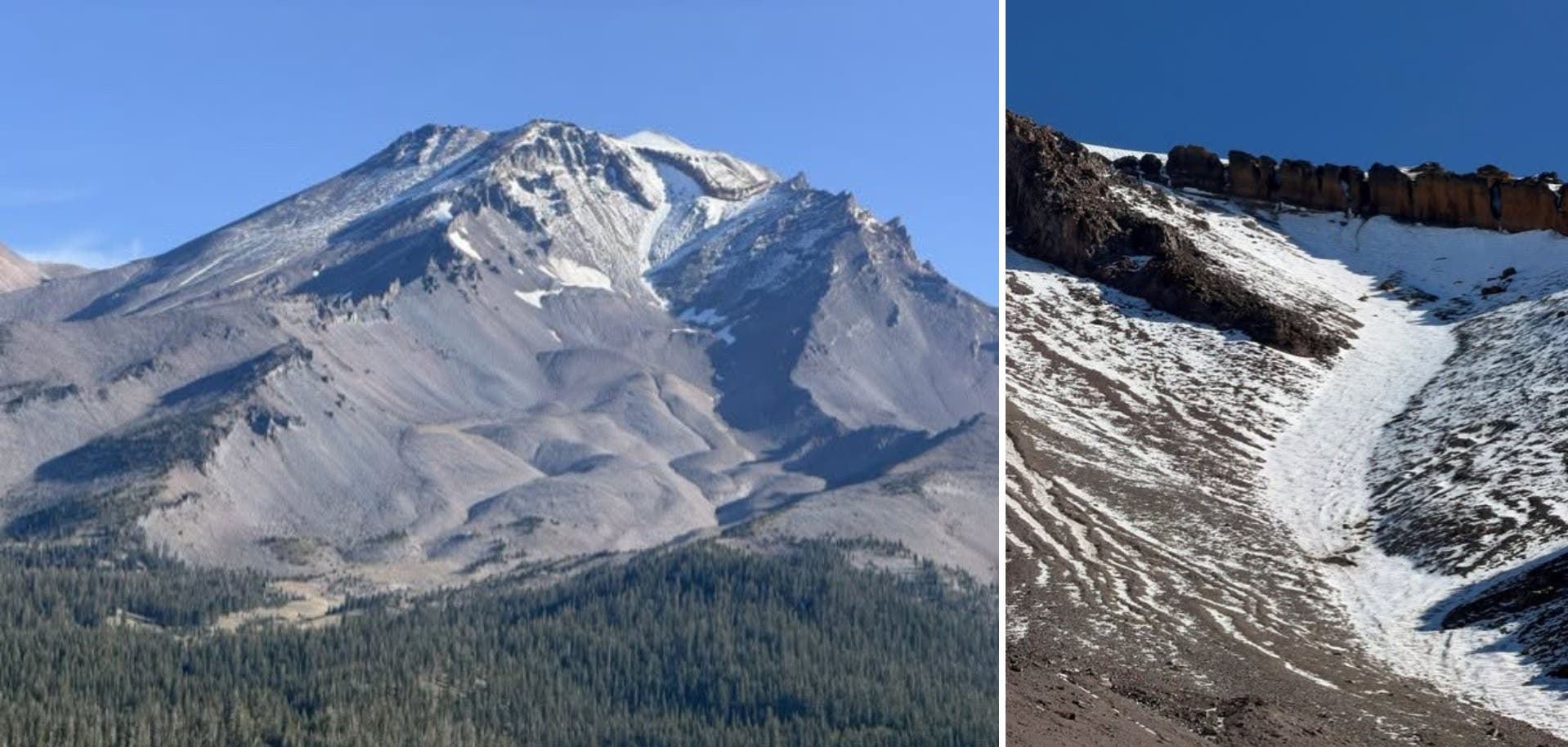
After his summit, the climber attempted to glissade down Avalanche Gulch, the most popular route to the top. Glissading involves sliding down a steep snowpack and is a technique some use to descend a mountain quickly.
But he lost control and slid about 500 vertical feet down the slope. During the fall, his feet were severely injured. So, he took off his mountaineering boots and walked through the night to a remote wilderness cabin to await rescue, in a statement.
“However, he ran into trouble shortly thereafter,” the Forest Service wrote. “His cellphone died after summiting, and the climber’s friends became concerned when they were unable to contact him the following day.”
Authorities have not released the climber’s name, age, or condition.
When he failed to check in, the climber’s friends reported him missing to the Siskiyou County Sheriff’s Office.
Avalanche Gulch Is No “Cakewalk”
Mount Shasta is one of California’s most popular peaks for mountaineers. Seven year-round glaciers cover its flanks, making it a perfect testing ground for budding mountaineers hoping to learn to use crampons, ice axes, and other mountaineering gear.
The climber was in the Avalanche Gulch area, the classic mountaineering route to the mountain’s peak. It’s not an overly technical route, but it requires a 7,000-foot vertical ascent, with exposure to steep snow, ice, rockfall, and extreme weather. The Mount Shasta Avalanche Center (MSAC) wrote on its website.
“The climb to the summit is steep and rigorous, requiring crampons, a mountain axe, helmet, and basic snow travel skills,” MSAC wrote. “Don’t consider this route a cakewalk.”
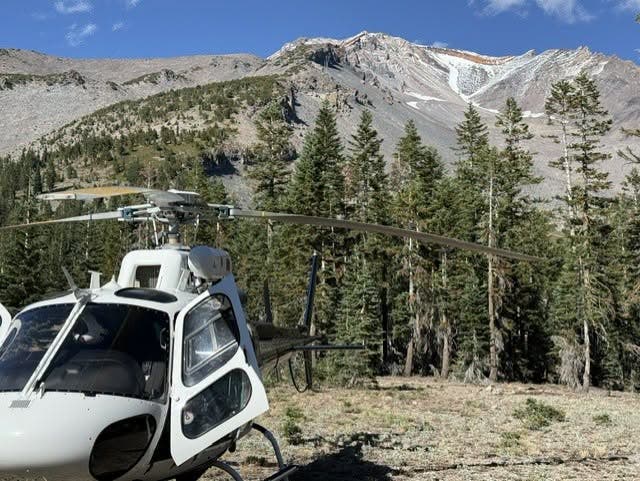
According to MSAC, the best time to climb Avalanche Gulch is April through June, sometimes July, and rarely August through November. In late summer, lower portions of the trail lose their snow cover, exposing climbers to loose scree, talus, and difficult hiking conditions.
“Later season climbing will expose you to dramatically increased rock fall and is not advised,” MSAC writes.
Mount Shasta Climbing Rangers, Siskiyou County Sheriff’s Search and Rescue, and the California Highway Patrol (CHP) began searching for the climber at 2 P.M. on September 11. Two hours into the search, responders said a hiker called them from Horse Camp, a historic base camp and alpine refuge located at about 7,900 feet.
The hiker had found the missing climber—and he was barefoot.
During his fall, the climber sustained significant lacerations and injuries to his feet. When trauma occurs at a high altitude, tissue can swell rapidly, making rigid mountaineering boots exceptionally painful.
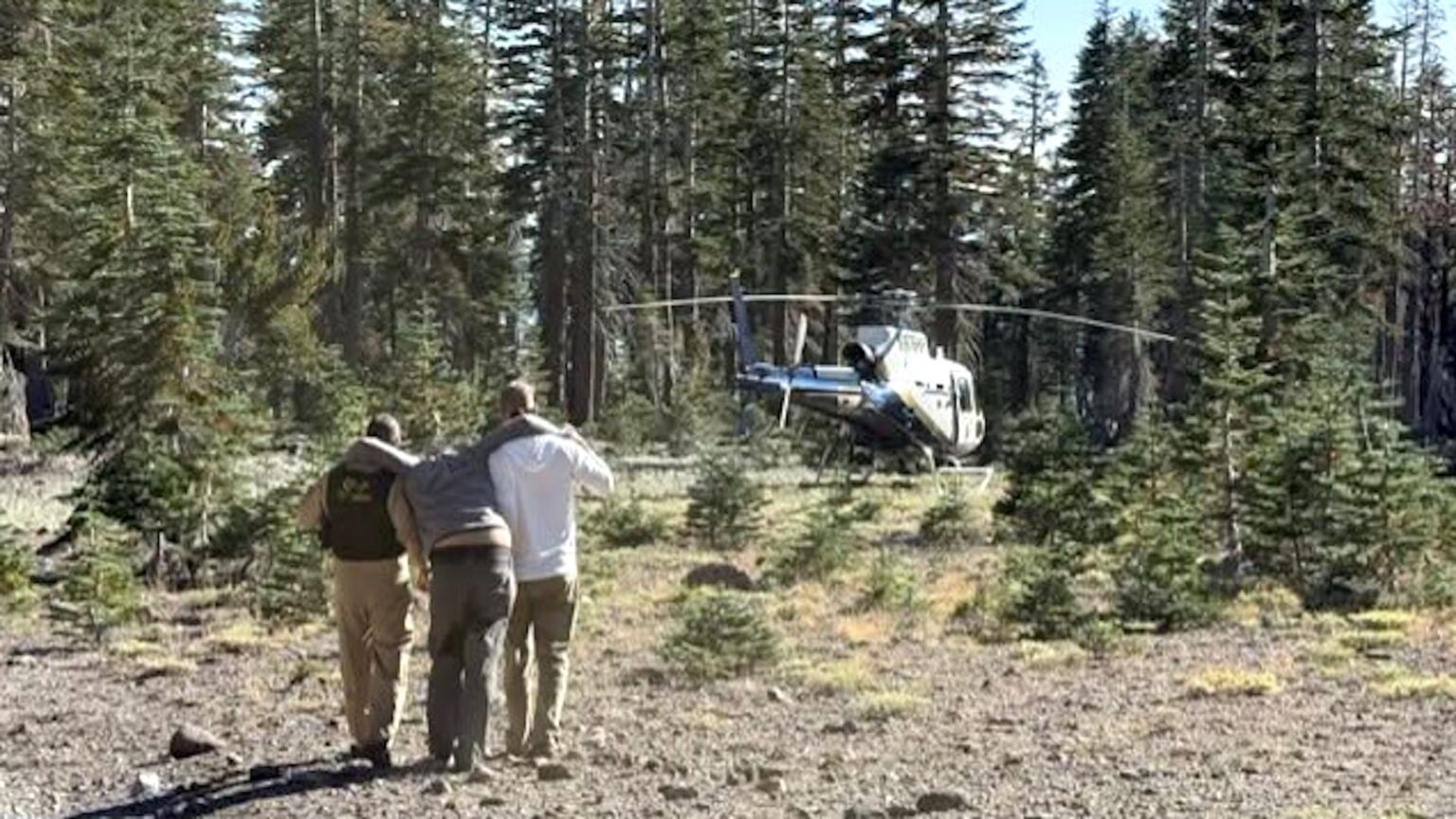
“The climber removed his boots due to painful swelling and crawled through the night, down the remainder of Avalanche Gulch to the Horse Camp Cabin,” the Forest Service wrote. “After evaluating the climber’s injuries, he was airlifted from Horse Camp to a nearby hospital for treatment.”
Start Early, Leave Early
The Forest Service notes there are several lessons to be learned from this incident. For starters, don’t start such an ambitious hike so late in the evening. In mid-September, the sun sets around 7 P.M.
“When climbing Mount Shasta or a similar objective, give yourself plenty of daylight to hike out,” a STFS spokesperson wrote. “This makes the descent safer, and if you or another member of your party needs help, it is easier for rescuers to find and assist you.
Experts recommend climbers set a noon turnaround time when climbing Mount Shasta, even if that means they’re short of the summit.
Always share your itinerary with at least one person, and give them a plan on what to do if you don’t check in.
“The climber wisely notified his friends of his plan to climb Mount Shasta and made a point to check in and provide progress updates,” the STFS spokesperson wrote. When he lost contact, his friends contacted law enforcement to report him overdue and traveled to help with the search effort.
When using electronic navigation, have a backup and be ready to rescue. Never rely solely on a GPS or phone to navigate—if the devices stop working, hikers have to rely on their own navigational skills to get home safely.
“The Shasta-Trinity National Forest thanks the Siskiyou County Sheriff’s Office, SAR volunteers, CHP helicopter team, and the hiker who found the climber at Horse Camp Cabin for their assistance in this mission,” the spokesperson wrote.