






Published August 4, 2026 01:05AM
In July 2026, authorities officially confirmed that human remains discovered in late 2025 belonged to renowned hiker Bill Ott, bringing resolution to a 14-year-old Grand Canyon cold case. Anthropologist Scott Thybony, a friend of Ott’s, participated in the original search-and-rescue mission in 2012. What follows are Thybony’s field notes from that search in May 2012.
A park ranger at Grand Canyon National Park just called. The National Park Service (NPS) is launching a search for missing hiker Bill Ott, an experienced outdoorsman and friend of mine.
On April 5, 2012, the 65-year-old Oregon man set out on a three-week, solo thru-hike of a remote area of the Grand Canyon. He was searching thousand-year-old rock panels on the Hualapai Indian Reservation, pictures from the past that he had spent years chasing, photographing, and digitally recreating.
We’d talked about these rock panels at length in my Flagstaff, Arizona, office. I’m an anthropologist and have traveled throughout North America on exploratory assignments, including those during my days as a National Geographic explorer. I knew where Bill was headed—a friend had dropped him off, and he planned to loop around Mohawk Canyon and come out farther east through National Canyon, hitchhike to a motel, and phone a friend for a ride back to Flagstaff.
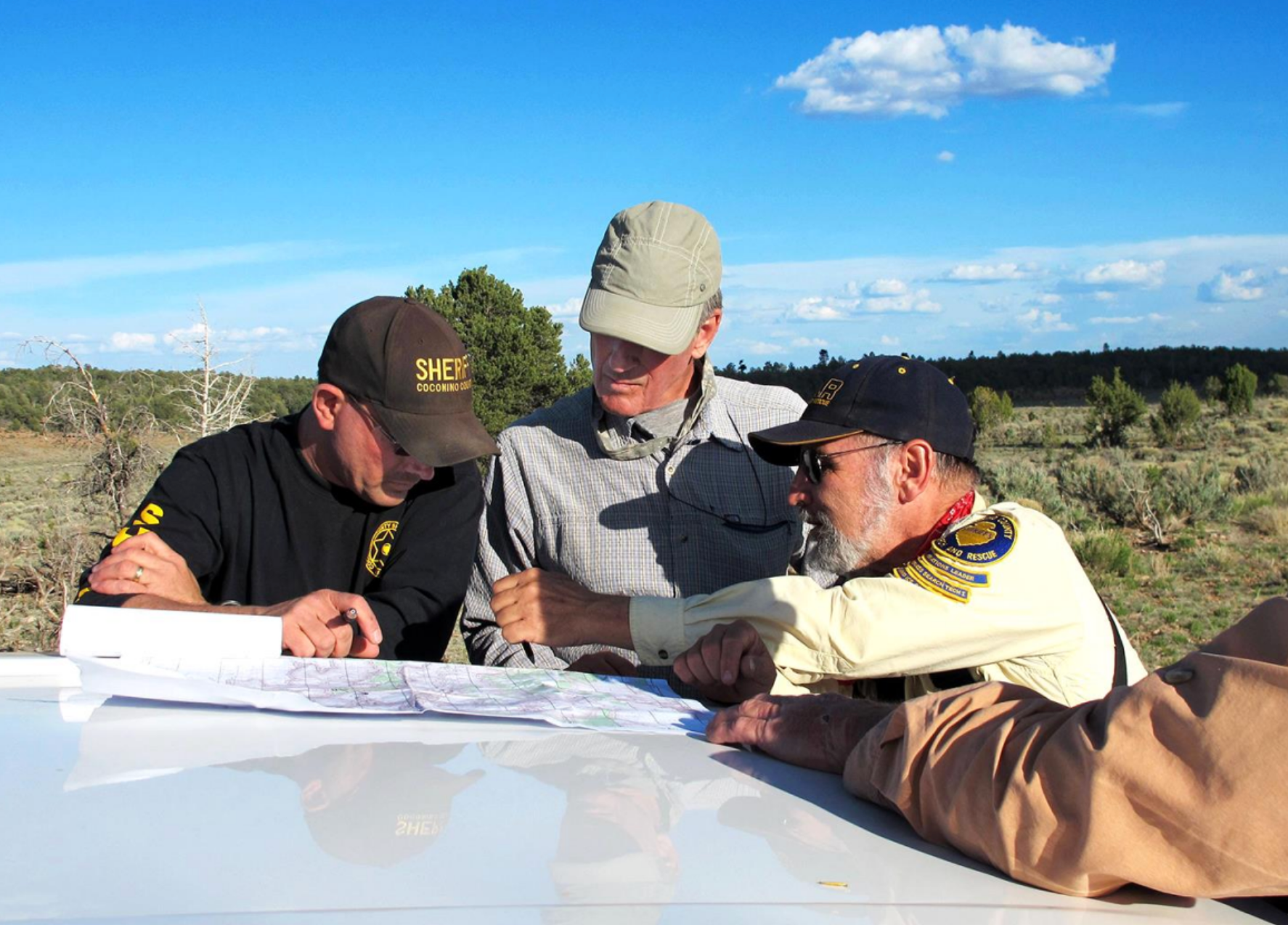
But now Bill is 12 days overdue. So, I called up Sergeant Aaron Dick, the head of the Coconino County Sheriff’s Search and Rescue Team. We’ve worked together on other disappearances in the area, and my insight could help find Bill.
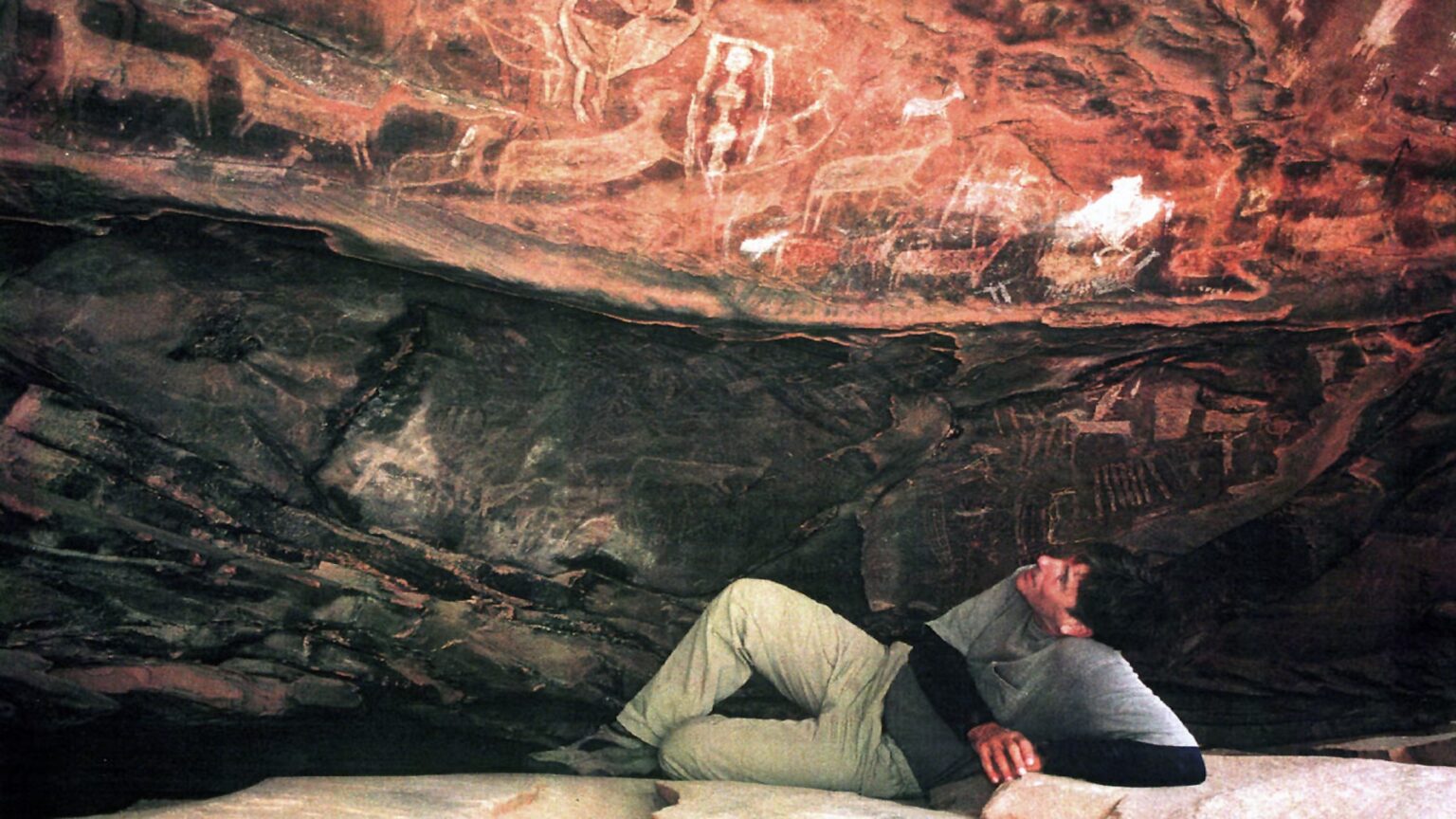
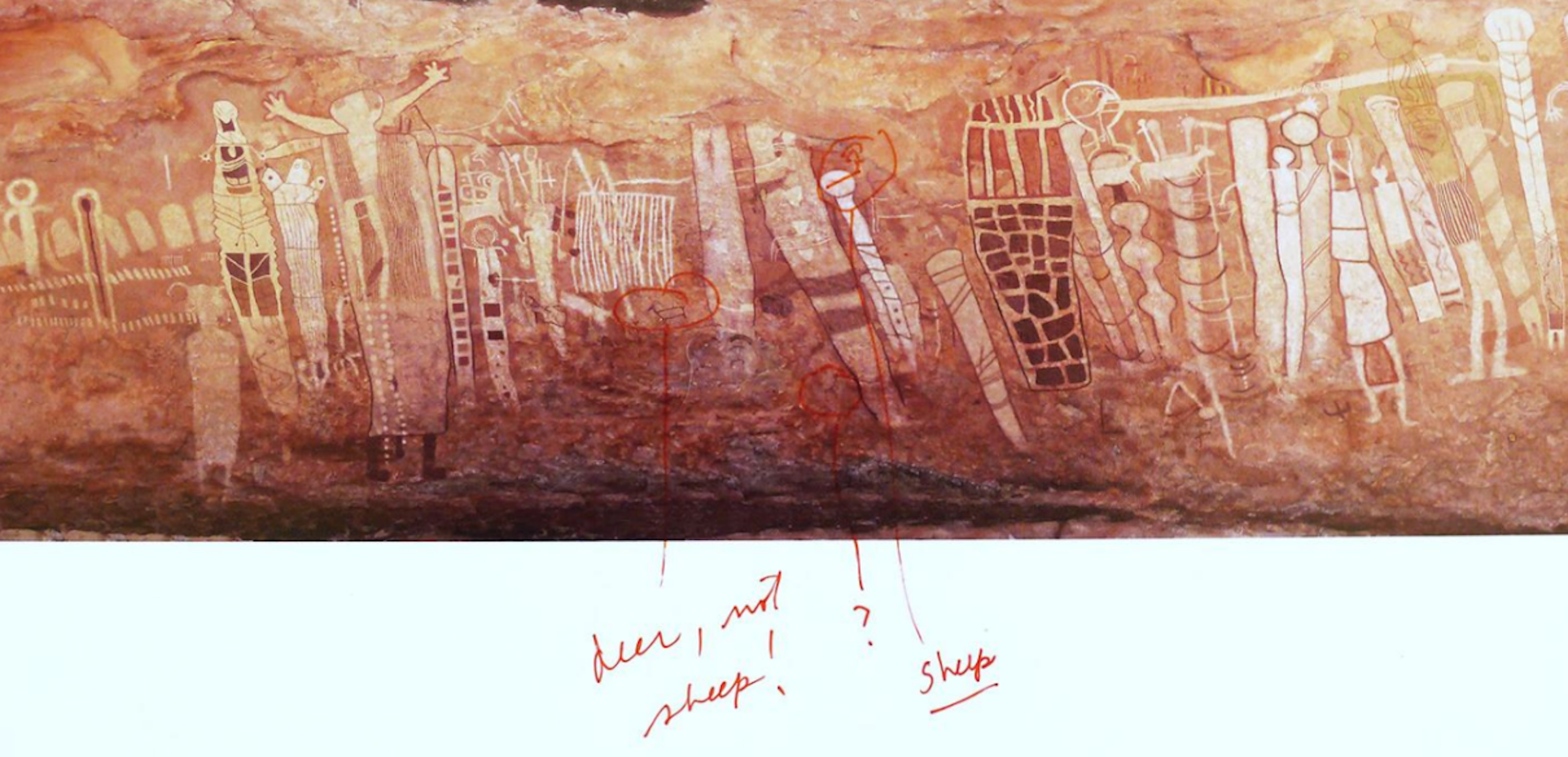
Bill is looking for painted images that crowd the back walls of rock shelters found deep within the western Grand Canyon. Spectral bodies stretch up cliff faces, long and narrow. At one site, a human form incorporates the traits of a mountain lion with cat eyes and ears. Next to it, an antlered figure stands with arms outstretched and the soles of its feet painted red. Another panel shows red lines radiating from a pair of green suns floating above a ghostly figure. Among the last traces of a way of life so different from our own, the rock art has a haunting effect.
On a previous visit, Bill and I pored over maps showing the locations of key panels. His latest passion project involved photographing as many panels as he could find, then using computer software to recreate how they appeared when originally painted.
During his last pass through Flagstaff, we met up, and he asked me, “Where haven’t you searched?”
“Across the river on the south side,” I told him. “As far as I know, no one has looked there.”
I had no doubt in my mind that he could handle the harsh, remote desert conditions. Bill was an elite Grand Canyon hiker and former river guide. In 1981, he started walking at Lees Ferry and didn’t stop until he reached the end of the Grand Canyon, some 600 miles and 78 days later. He was the first to complete the full traverse on the north side of the Colorado River. In a note, Bill once said that he set out on the journey simply for the beauty of it.
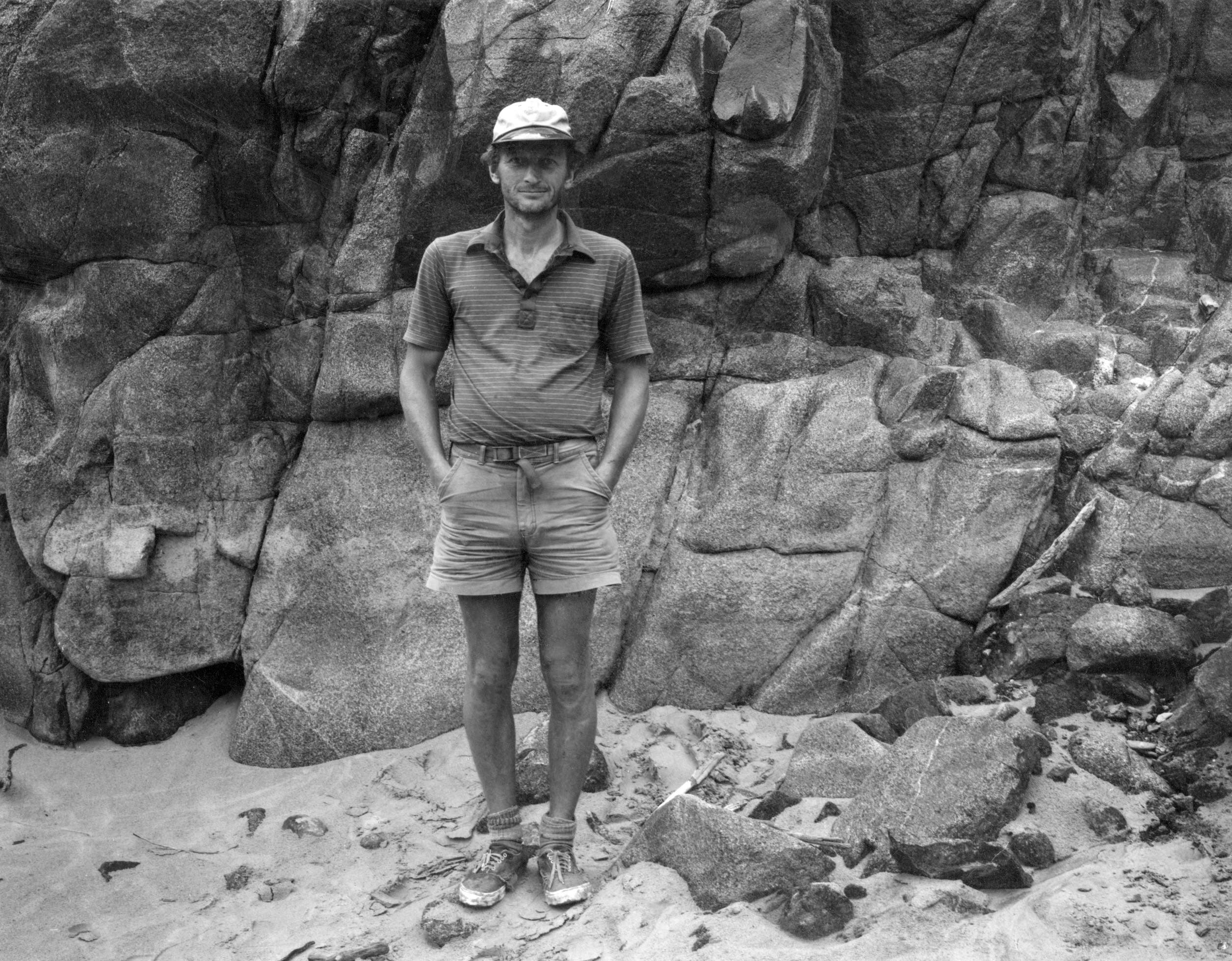
“The fact that no one had done the wild undeveloped side was an added bonus, I guess, but not the ‘reason’ for the trip,” he wrote. He was a self-described “simple man” who gave up a life of full-time work to move to Oregon on a $250 motorcycle.
“[I] did a ‘pseudo Walden’ experiment building a cabin, processing firewood with hand tools only and decided it was time for a long walk on the desert landscape,” he wrote in his journal. “How fine is good society… how magnificent is solitude!”
Ahead of his final hike through the canyon, Bill told his friends, “Whatever happens—no search, no rescue.”
We would spend the next 14 years searching.
On May 10, 2012, the sheriff mounted an intensive search. Sergeant Aaron meets me at their headquarters after returning from the initial search effort. With maps spread on a table, he briefs me on what they found. One of the strike teams came upon a Ziploc trampled by wild horses’ hooves. It contained medical pills thought to have slipped out of Bill’s pack near the start of the trip. Some were for pain, others unidentified. Search teams also found boot prints on the canyon floor, possibly left by the missing hiker.
I tell Aaron what I know about Bill—his capabilities, travel style, and the locations he would search for polychrome sites. He asks me what I thought might have happened. Water would be Bill’s chief concern. We’ve had a dry spring, and it’s unlikely he would have found much on the level he intended to explore.
“He either ran out of water, had a medical emergency, or both,” I tell him. “When you travel on the Esplanade, you’re forced to depend on water pockets, and they have a way of drying up when you need them most.”
Before I leave, Aaron asks if I’d be willing to join them the next morning. At 6 A.M. I’m back with a pack holding enough food and water to last three days. About a dozen searchers gather in the briefing room, most wearing yellow Nomex shirts and black radio harnesses. Designed to keep essential items handy, the harness holds not only a radio but also maps, flagging tape, a signal mirror, a notebook, a GPS, and sometimes a satellite phone.
I describe to Lieutenant Mark Christian and the rest of the responders where Bill would most likely go to look for rock art. Each of us also receives an outline of Bill’s shoe size and a photo of the type of sandal he was known to wear in camp. We also take in photos of Bill, dressed in gray and khaki, taken at the start of his hike. He carried an older pack made of Cordura cloth with a replaced bottom, stuffed as tightly as a sausage. A full day pack was also strapped along the outside to give him more capacity. He carried his basic gear and food for 21 days that could be eaten cold. Responders estimated he was carrying only a gallon or two of water. Highly experienced, he knew what he was doing and knew the risks he was taking.
We pack Aaron’s truck with gear, files, and electronics before heading west on I-40. SAR leader Art Pundt joins us with his mounted laptop and mapping software used for navigating intense terrain. Aaron and Art work out the strategy for the day’s search, making assignments for each team of two. When a person goes missing, Art asks himself what he would have done in similar terrain.
“What would the terrain force a person to do, and how would it affect their thinking and decision making? The mind and landscape become one,” Art says.
The sheriff’s caravan pulls off the interstate at Seligman, Arizona, and takes Route 66 to the turnoff for Havasu Canyon. It’s a paved road, but a few miles past Frazier Well we turn into dirt. Three hours after leaving Flagstaff, we stop where a track branches toward Mohawk. The strike teams gather to learn their assignments and the order in which they’ll be flying out. Within fifteen minutes, an air rescue helicopter sets down in a sagebrush clearing.
Soon, fellow SAR responder Sueanne Kubicek and I are flying over the immense canyon, scanning the trails below made by wild horses and bighorn sheep. Mohawk Canyon cuts a deep gorge pointing north with a number of feeder canyons leading in before reaching the Colorado River. For hundreds of square miles, sunlight falls across an expanse of massive cliffs and bare rock terraces. Flying over such complex terrain reminds me of what we face. Somehow we have to find a lone human, a single pinprick, in a vast expanse of broken rock and sheer cliffs. The pilot drops us off near where possible boot prints were spotted yesterday, and we begin searching our sector.
Sueanne works as an EMT and has extensive canyoneering experience. The two of us follow Bill’s probable travel routes, as well as some improbable ones, along a broad bench known as the Esplanade. We check pinch points where a person on foot would be funneled between cliff and canyon. In these areas, we also look for “track traps,” soft ground in protected places where footprints might last for several weeks. Bill planned to use overhangs as base camp, so we look under tucked rocks. Other teams scour the area on foot, horseback, and all-terrain vehicles. A mobile command center on the rim coordinates the effort.
We find only a handful of sites suited for either a camp or rock art—and no sign anyone has been there. With binoculars, I check out distant ledges, but it still takes hours to cover our assigned area. On the return leg, we scramble down to a rock shelter with a roasting pit in front. I follow a ledge and break a dead juniper branch to clear the route. No one has been this way.
Reaching the prehistoric site, we find the powdery dust on the floor undisturbed. It has a smoke-darkened ceiling from old campfires, a primitive corncob, and various stone artifacts. Visible from the trail, it’s the type of site Bill would have checked out, but I see no sign of him having been here. Stooping down, Sueanne spots a faded rock art panel on the back wall. A few stickmen stand spraddle-legged, painted with white pigment in a style far different from the dramatic polychrome panels across the river.
The chance Bill made it past this point is slim. We find no tracks, no camps, and none of the ancient rock art he sought. Another team located a set of boot prints and a couple of sandal tracks near a water pocket in the bed of Mohawk. We knew Bill had a habit of changing into sandals at camp. It’s our best lead yet.
As the sun sets, the chopper returns to pick us up. We’ll have to pick up our search tomorrow.
The search teams fly back to the command post one by one, and we return to Flagstaff. After only a few hours of sleep, I’m back the next morning for a second search. All told, I spend three days searching for Bill, but leave without any clear understanding of what happened to him. His in-depth experience would have increased his odds for survival, so officials extend the search for several days. On a long trek the previous year, Bill suffered an injury causing him to be a week overdue. Another accident may have happened this time, or a medical emergency may have forced him into the shade of a low overhang where spotting his body would be extremely difficult.
When no new leads turn up, the incident command team scales back the search.
Returning to Flagstaff, I begin to sort out what might have happened to him. He likely began his hike as intended, making camp near water above the Redwall. Then his original plan unraveled. Possibly impaired by an injury or sickness, he cut his trip short and headed back up the canyon.
During the search, one responder said to me, “We often know the missing person’s Plan A, but we never know Plan B.”
The next day, I head over to Glenn Rink’s house in Flagstaff. Bill and Glenn were good friends, and Bill left his Ford Ranger with Oregon tags parked at Glenn’s. I want to hear Glenn’s take on the mystery. A former river guide, Glenn was working at the time as a field botanist and is getting ready to leave on a plant survey.
Glenn and I compare notes about our searches. His team was dropped off on the floor of Mohawk, and they headed down the canyon. They found tracks that showed someone had walked in both directions, but those prints ended at a dry fall in the Redwall cliff. Glenn said he climbed behind a chockstone and continued to descend into the canyon, but never found tracks in the lower section. He’s as perplexed as I am.
The disappearance of Bill remained another canyon mystery until December 10, 2025. Thirteen years after he went missing, the Hualapai tribal police discovered human remains scattered at the foot of a low cliff in upper Mohawk Canyon. A driver’s license found with them provided a tentative identification of the sun-bleached bones as Bill. Later, the medical examiner confirmed the identification with a DNA match.
At the time, Aaron briefed those of us who were involved in the initial search. On hearing the news, my first reaction was relief at bringing the search to a close. The next moment, I wondered what Bill was doing there. The Tribal police retrieved his daypack, camera, and other gear. Still missing is his main backpack. The GPS unit he carried shows he made his way down canyon as far as the Redwall. No waypoints were made on his hike back. I suspect a medical condition severely weakened him, and he stashed his main backpack to reduce weight. Moving slowly, he worked his way up the trail. After ascending a series of steep switchbacks, he needed to find shade and rest. Leaving the trail, he reached the base of the cliff where his last trek ended.
Unfortunately, there are answers we may never have. But there are clues that help us paint a picture, just like those that Bill was in search of. During his Grand Canyon traverse in 1981, Bill kept a journal.
“Where is it I walk?” he wrote. “Is this some magical paradise on another world or truly just a dry canyon in Arizona? I am awed again and again, and with more gentle rain it becomes the source of joy I have come to know here . . . please let there not be an end to this.”
His last trip took him below the rim again, drawn back to that other world.
Thybony’s field notes have been edited for clarity.